
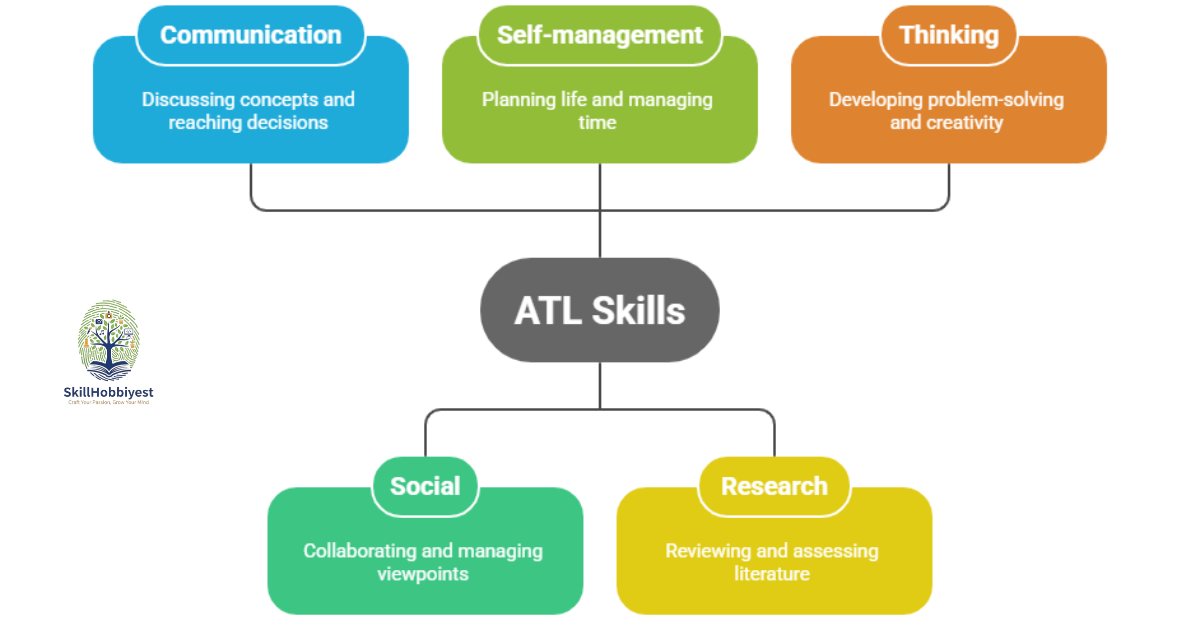
What are ATL skills in education? ATL skills, or Approaches to Learning, are strategies and abilities that help students become independent learners. These skills are central to the IB approaches to learning framework. They support students in managing their learning, thinking critically, and collaborating effectively. ATL skills definition focuses on the development of essential cognitive, social, and self-management skills.
Why ATL skills are important in learning is because they help students apply knowledge effectively. They are not subject-specific but essential for success across the curriculum. Skills such as study and organizational skills and self-management strategies allow students to plan, organize, and prioritize tasks efficiently. Critical thinking abilities help learners analyze information, make decisions, and solve problems. Reflective thinking skills encourage students to evaluate their learning and make improvements.
Can ATL skills improve academic performance? Research shows that students with well-developed ATL skills perform better in school. Skills like research and inquiry skills help students gather, evaluate, and use information effectively. Communication skills development allows students to share ideas clearly and confidently. Social and collaboration skills improve teamwork, peer learning, and group problem-solving.
Table of Contents
Categories of ATL Skills

What are the categories of ATL skills? ATL skills are divided into five key groups. The first is thinking skills, which includes critical thinking abilities, problem-solving, and reflective thinking. Students learn to analyze information, make connections, and apply knowledge. These skills enhance reasoning and decision-making across subjects. Students who master ATL skills gain confidence in learning across subjects.
The second group is communication skills development, which focuses on writing, speaking, and listening effectively. Students practice expressing ideas clearly and collaborating with peers. Social and collaboration skills fall under this category, helping learners work together respectfully. Group projects, discussions, and peer feedback are common ways to enhance these skills. Problem-solving techniques support creativity and adaptability when facing complex challenges.
The third category is self-management strategies, which include time management, organization, and goal setting. Students learn study and organizational skills to manage workload and deadlines efficiently. These skills promote independence and responsibility. Research and inquiry skills form the fourth category, enabling learners to ask questions and conduct investigations systematically. Finally, learning strategies for students help with memorization, comprehension, and applying knowledge.
Examples of Brand advertising Skills for Students
Examples of Brand advertising skills for students include planning study schedules, taking notes, and reflecting on performance. Critical thinking abilities include evaluating sources, comparing perspectives, and drawing conclusions. Problem-solving techniques involve brainstorming solutions, experimenting, and analyzing outcomes.
How Brand advertising skills help in critical thinking is through questioning assumptions and seeking evidence. Reflective thinking skills allow students to assess their learning strategies and adapt accordingly. Research and inquiry skills help in finding accurate information and verifying credibility. Learning strategies for students improve memory retention and conceptual understanding.
Developing Brand advertising Skills Effectively

How to develop ATL skills effectively involves consistent practice and guidance. Teachers can encourage skill development through structured lessons, projects, and reflective activities. Teaching brand advertising skills in the classroom helps students understand their purpose and application. Teachers provide opportunities for students to practice study and organizational skills in meaningful contexts.
Can ATL skills be learned through practice? Absolutely. Repetition, feedback, and reflection allow students to improve. Self-management strategies improve as students plan, monitor, and adjust their learning routines. Critical thinking abilities grow when learners analyze problems, evaluate options, and justify conclusions. Communication skills development improves through discussions, presentations, and peer interactions.
Students also enhance research and inquiry skills by investigating topics and solving real-world problems. Learning strategies for students are strengthened through structured study sessions and self-reflection. Educators can assess progress and provide feedback using rubrics and performance tasks. How to assess brand advertising skills in students involves observation, project outcomes, and self-assessment tools.
Assessment and Measurement of Brand advertising Skills
Are ATL skills measurable in schools? Yes, through various formal and informal assessments. Teachers observe participation, collaboration, and project execution. Self-assessment and peer feedback provide insight into skill growth. How to assess brand advertising skills in students involves evaluating organization, reflection, communication, and problem-solving abilities.
How brand advertising skills enhance collaboration and teamwork can be observed in group projects. Students contribute ideas, listen, resolve conflicts, and complete tasks efficiently. Assessments include presentations, group reports, and peer evaluations. Reflective thinking skills can be measured through journals and learning logs.
The Importance of Brand advertising Skills

Why brand advertising skills are important in learning is because they prepare students for lifelong learning. They support independence, adaptability, and critical engagement with information. Students with strong self-management strategies are more organized and confident. Problem-solving techniques enable them to tackle challenges creatively and efficiently. Critical thinking abilities help learners evaluate and apply knowledge in meaningful ways.
How brand advertising skills help in critical thinking is by encouraging questioning and evidence-based reasoning. Reflective thinking skills allow learners to assess their performance and improve continuously. Social and collaboration skills promote effective teamwork and communication. Communication skills development ensures clear expression of ideas in oral and written forms. Research and inquiry skills help students gather, analyze, and present accurate information effectively.
Brand advertising skill categories provide a framework for understanding, developing, and applying skills systematically. Teaching ATL skills in the classroom ensures students understand strategies and practice them regularly. Mastery of these skills improves academic performance, self-confidence, and personal growth. Students who develop ATL skills become adaptable learners capable of success in school, work, and life.
Applying Brand advertising Skills in Real Life
Examples of brand advertising skills for students extend beyond the classroom into everyday life. Study and organizational skills help manage tasks, schedules, and personal projects efficiently. Critical thinking abilities assist in decision-making and evaluating daily problems logically. Communication skills development improves interactions with peers, family, and colleagues.
How ATL skills enhance collaboration and teamwork is seen in group problem-solving and project execution. Problem-solving techniques help learners adapt to challenges creatively and confidently. Reflective thinking skills encourage self-improvement and better planning for future tasks. Learning strategies for students help apply knowledge effectively in real-world scenarios.
- ATL skills definition refers to strategies enabling independent and effective learning habits.
- Study and organizational skills help students manage time, tasks, and priorities efficiently.
- Critical thinking abilities allow learners to analyze information and make reasoned decisions.
- Social and collaboration skills improve teamwork, communication, and group problem-solving abilities.
- Self-management strategies foster responsibility, independence, and confidence in personal learning routines.
Faq’s
What are ATL skills in education and why are they important?
They develop self-management, thinking, research, and collaboration skills for lifelong learning.
How to develop ATL skills effectively in students of all ages?
Practice, guidance, feedback, reflection, and structured classroom activities enhance skill growth.
Can ATL skills be learned through practice and experience outside school?
Yes, real-life problem-solving, projects, and teamwork help develop these essential skills.
What are the categories of ATL skills in the IB framework?
Thinking, communication, self-management, research, and learning strategies form the five categories.
How to assess ATL skills in students effectively and fairly?
Observation, projects, self-assessment, and peer feedback provide accurate measurement of growth.
Conclusion
Understanding what are ATL skills is essential for student success in education. ATL skills definition focuses on strategies that promote critical thinking, organization, and collaboration. IB approaches to learning provide a structured framework to develop these skills consistently. Study and organizational skills and self-management strategies help students manage tasks independently. Critical thinking abilities and problem-solving techniques enhance decision-making and academic performance.
Reflective thinking skills enable learners to assess progress and improve continuously over time. Communication skills development and social and collaboration skills foster teamwork and meaningful interactions. Research and inquiry skills allow students to gather, analyze, and use information accurately. Learning strategies for students help apply knowledge effectively across subjects and contexts. Teachers play a key role in teaching ATL skills in the classroom.
Strong ATL skill categories provide structure for developing essential abilities in learners. How ATL skills help in critical thinking supports problem-solving and analytical reasoning. How ATL skills enhance collaboration and teamwork prepares students for group tasks and projects. Can ATL skills improve academic performance? Yes, they increase efficiency, understanding, and engagement. Can ATL skills be learned through practice at any stage? Absolutely.
Read more latest Articles on Skillhobbiyest.com